

Hear from Our Customers
You’re noticing symptoms when you’re home—headaches that clear up at work, sinus pressure that won’t quit, or that musty smell you can’t track down. Maybe you had a leak six months ago and you’re wondering what’s happening behind the drywall now.
Here’s what changes after professional mold testing: you know exactly what you’re dealing with. Not a guess from a hardware store kit. Not anxiety every time you walk into the basement. You get lab results that tell you what’s in your air, where it’s coming from, and what needs to happen next.
Your home in Plumstead represents a significant investment—median values here are pushing $573,000. Mold doesn’t just affect how you feel. It compromises structural integrity, tanks property value, and creates liability if you ever need to sell. Testing gives you the information to act before small problems turn into five-figure remediation projects.
We serve Plumstead and the surrounding Bucks County area with one focus: accurate detection using technology that actually works. We’re not a franchise following a script. We’re local mold check professionals who understand Pennsylvania homes—the older construction, the basement moisture issues, the way our climate creates perfect conditions for growth.
When we test your home, you’re not just getting a report. You’re getting direct access to the mycologists at our partner lab who can explain what your results mean. You’re working with someone who’s seen hundreds of Plumstead homes and knows the difference between surface mildew and a hidden contamination problem that needs immediate attention.
We use infrared thermal imaging, moisture mapping, and certified air sampling because those tools find what you can’t see. And we explain everything in plain terms, because you shouldn’t need a biology degree to understand what’s happening in your own house.
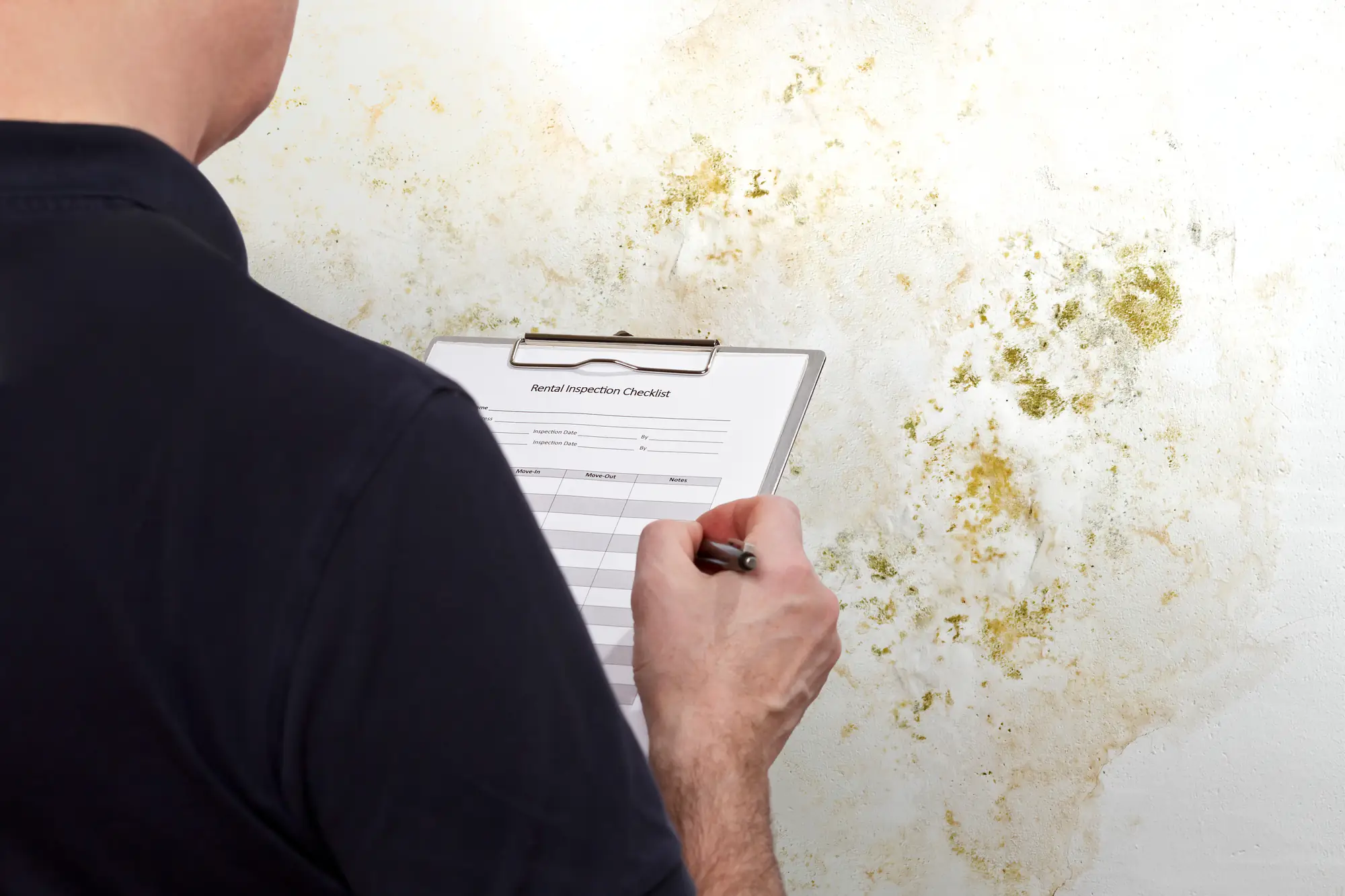
First, we talk. You tell us what you’ve noticed—symptoms, smells, visible spots, history of water problems. That conversation guides where we look and what we test.
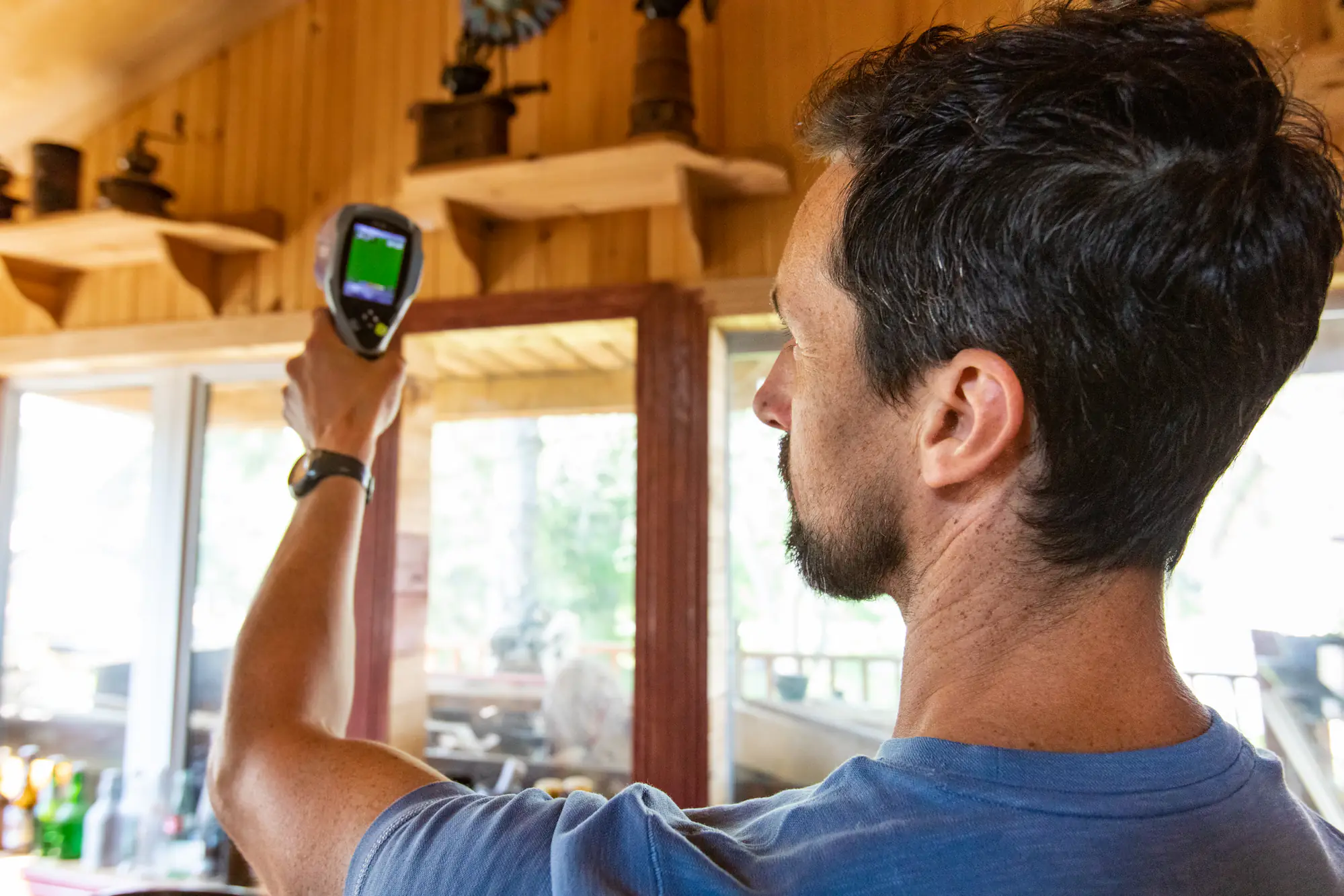
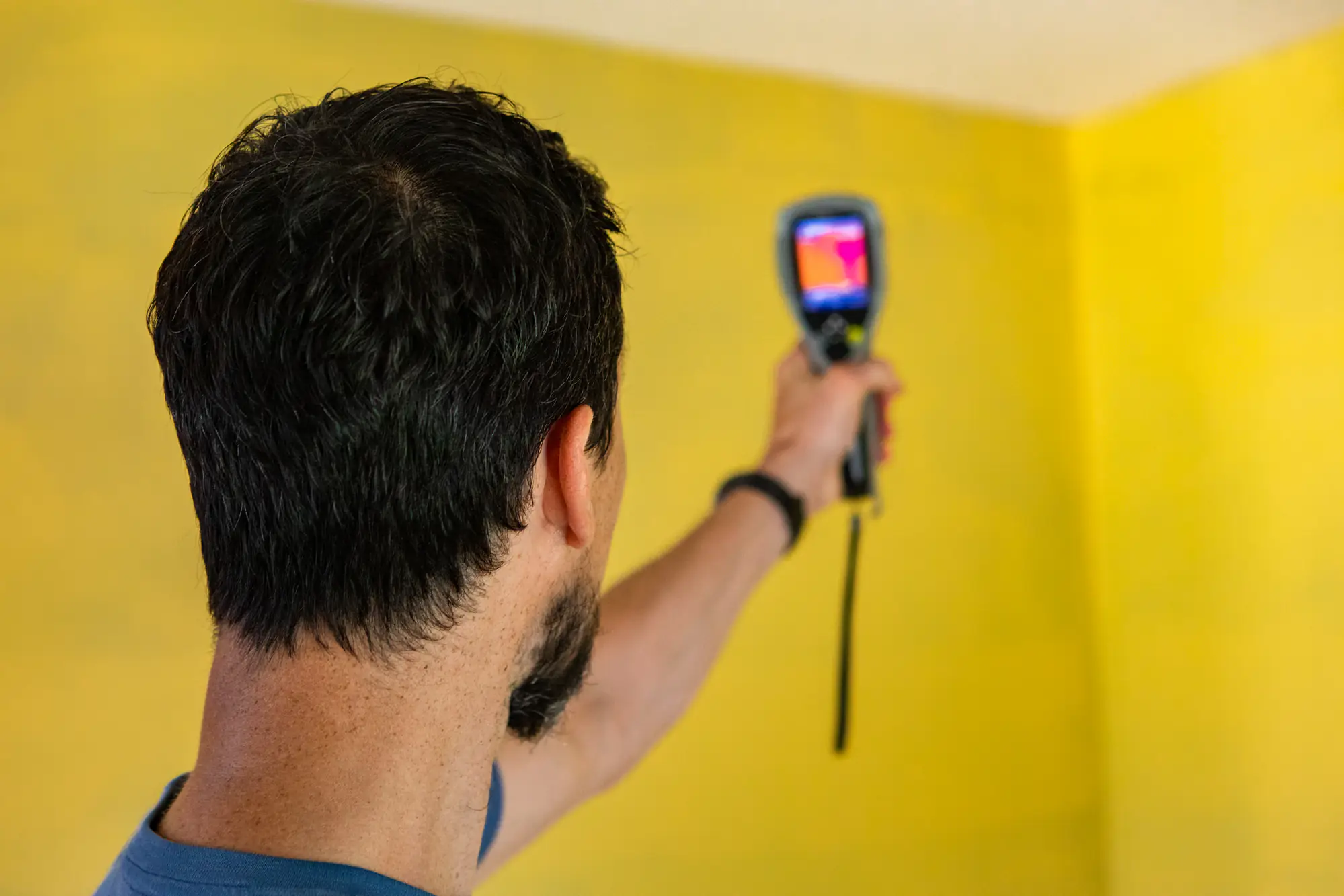
Then we inspect with thermal imaging and moisture meters. These tools show us temperature differentials and moisture levels behind walls, under floors, and in ceilings. Mold needs moisture to grow, so we’re mapping where conditions are right for contamination even if nothing’s visible yet.
Next comes air sampling. We collect samples from multiple areas in your home and send them to a certified lab for analysis. This isn’t a color-changing strip from a big box store. It’s a detailed breakdown of mold species, spore counts, and concentration levels compared to outdoor air.
You get a full report within days. We review it with you, explain what each finding means, and outline your options. If remediation is needed, we tell you what that looks like—scope, timeline, cost range. If it’s minor and you can handle it yourself, we’ll tell you that too. No pressure. Just information so you can make the right call for your home and your family.
Ready to get started?
Every mold testing appointment includes a visual inspection, thermal imaging scan, moisture level assessment, and air quality sampling. We’re looking for active growth, moisture sources, and airborne spore concentrations that indicate a problem.
Plumstead’s housing stock includes many older homes with basements, crawl spaces, and attics that are vulnerable to moisture intrusion. Pennsylvania’s precipitation has increased 5-10% in recent years, which means more water finding its way into places it shouldn’t be. We check those high-risk areas specifically because that’s where problems develop in homes like yours.
You’ll receive a lab report that identifies mold species present, quantifies spore counts, and compares indoor levels to outdoor baseline readings. If we detect elevated levels of Stachybotrys (black mold), Aspergillus, Penicillium, or other common indoor molds, the report explains health implications and urgency level.
We also document our findings with photos and moisture readings so you have everything you need for insurance claims, real estate transactions, or contractor bids if remediation is required. And you can call the lab directly with questions—our partner keeps mycologists on staff specifically for client consultations.
Professional mold testing typically ranges from $300 to $600 depending on your home’s size and how many areas need sampling. That includes the inspection, lab analysis, and detailed reporting.
If you’re comparing that to a $10 hardware store kit, here’s the difference: those kits only tell you mold is present, which isn’t useful because mold exists everywhere. Professional testing tells you what species, at what concentration, and whether levels are elevated compared to normal outdoor air. That’s the information you actually need to make decisions.
Some testing may be covered by homeowner’s insurance if mold resulted from a covered event like a burst pipe or roof leak. Check your policy or ask us—we can provide documentation formatted for insurance claims.
The on-site inspection and sampling usually takes 1-2 hours depending on your home’s size and how many areas we’re testing. We’re thorough but efficient—we know you’re busy.
Lab results come back in 3-5 business days. Once we have them, we’ll schedule a call or meeting to review findings and discuss next steps. You’ll get the full written report with all lab data, photos from the inspection, and our recommendations.
If you’re in a time-sensitive situation—buying a home, dealing with a tenant dispute, or experiencing severe symptoms—let us know. We can often expedite lab processing for an additional fee and have results in 24-48 hours.
You can, but you won’t get useful information. Home test kits detect mold presence, which isn’t meaningful because mold spores exist in every home. What matters is the type of mold and the concentration level.
Professional testing uses calibrated equipment and lab analysis to identify specific species and measure spore counts. That tells you if you have a problem that needs remediation or just normal background levels. It also pinpoints moisture sources so you can fix the root cause, not just treat symptoms.
If you’re experiencing health issues, dealing with property value concerns, or need documentation for insurance or legal purposes, a $10 kit won’t cut it. You need certified lab results and a professional assessment that holds up under scrutiny.
In Plumstead and throughout Bucks County, we most commonly find Aspergillus, Penicillium, Cladosporium, and Stachybotrys (black mold). Each has different health implications and growth patterns.
Aspergillus and Penicillium thrive in damp indoor environments and often show up in basements, bathrooms, and around HVAC systems. They can trigger allergic reactions and respiratory issues, especially in people with asthma or compromised immune systems.
Stachybotrys—the black mold everyone worries about—needs sustained moisture and cellulose materials like drywall or wood. It’s less common but more concerning because it produces mycotoxins linked to more severe health effects. If we find it, remediation is usually necessary. The good news is professional testing identifies exactly what you’re dealing with so you can respond appropriately, not just panic over every dark spot you see.
No, you don’t need to leave during testing. The process is non-invasive and doesn’t disturb mold or create airborne spore issues. We’re collecting samples and taking measurements, not tearing into walls or disturbing contaminated materials.
You’re welcome to stay and follow along during the inspection. Many homeowners prefer to be present so they can ask questions, point out concerns, and understand what we’re finding in real time.
The only time you might need to leave is during actual mold remediation if testing reveals a problem that requires professional removal. But that’s a separate process that happens after testing, and we’ll discuss all of that before any work begins. Testing itself is completely safe for you, your family, and your pets to be home.
First, don’t panic. Finding mold doesn’t automatically mean you need to gut your house. The lab report will show you what species are present and at what levels. Some findings require immediate professional remediation. Others might just need better ventilation or a dehumidifier.
We’ll walk you through the results and explain what’s actually necessary. If remediation is needed, we’ll outline the scope—what areas are affected, what materials need removal, what the timeline looks like, and what it typically costs. You’ll have all the information to make an informed decision.
You’ll also want to address the moisture source. Mold is a symptom of a water problem. Whether it’s a leak, condensation, poor drainage, or humidity issues, fixing that root cause is essential or mold will just come back after remediation. We help you identify those sources during testing so you can tackle everything at once and actually solve the problem for good.
Other Services we provide in Plumstead